Cyber Security Articles

Guest Post by Paddy Srinivasan, Chief Product & Technology Officer, LogMeIn Given the rise of the Delta variant in the
GUEST POST by Amanda Fennell The echoes of 2020 have reverberated into 2021 with another record-breaking year for data compromises.
From Avatier Rumors of the death of the password have been greatly exaggerated. In fact, passwords have become more important
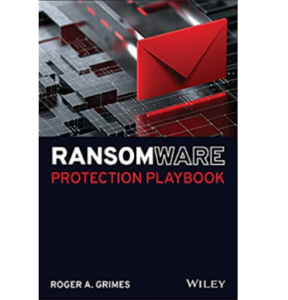
The new Ransomware Protection Playbook, by Roger Grimes (Wiley) is a book that I suspect will be widely embraced by
Data Theorem has launched the industry’s first Active Protection including observability and runtime defense, delivering comprehensive security across modern application stacks including API,
This is a review of the second edition of Cyberspace in Peace and War, by Professor Martin Libicki of the
Ransomware is on the rise, up tenfold from 2020 to 2021. The amounts paid in ransom have also jumped up
by Sam Ingalls  Since the days of Hammurabi – nearly four thousand years ago – insurance has been a system
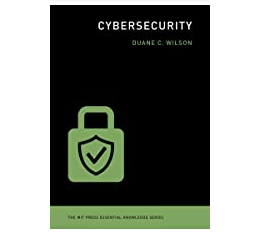
The latest volume in the MIT Press Essential Knowledge Series is Cybsecurity, by Duane C. Wilson. The book is being
These days, journalists face threats from hackers, some of whom work for powerful state actors, who may expose their private

Cyber Security Articles


What This Cyber Security Articles Page Is About
The goal of Journal of Cyber Policy is to provide commentary and stimulate conversations about important cyber security topics. Our parallel goal is to discuss cyber issues in plain English, liberating this critical subject from the exclusive realm of specialized engineers and hackers. Throughout, we try to talk about cyber security and related issues from the perspectives of public policy, national security, corporate policy and compliance.


Why Articles about Cyber Security Matter

We are living in an era where digital technology dominates so much of our lives. Digital risk naturally accompanies this reality. Smartphones, the IoT, the Internet and so forth make our lives easier, but they also expose us to threats. Some of these threats come from nation state actors. We believe Americans could be better-informed about these risks. And, while there’s certainly no lack of content online about cyberthreats, room still exists for cyber security articles that integrate the subject’s diverse themes of technology, politics and business.

For example, Russian disinformation and Chinese espionage are not new, but today’s digital landscape makes these familiar tactics deadly, in political terms. The Cold War was largely analog in nature, with offensive campaigns quite limited in scope and impact. While Cold War dynamics may survive today, they are having a radically different effect on American society and politics than anything that came before.

It can be tricky to tease out the differences between today and a generation ago. American politics and governance have always been messy, dishonest and idiotic, but there were at least some fact-based controls on it. This is no longer the case. Our enemies are exploiting this new reality. In some cases, they’ve created this new reality.

We see the impacts of these new measures, but leaders across the government and business sectors generally fail to understand the transformative nature of technology, e.g. Amazon is not just a bigger mail order store; the iPhone is not just a phone with fancy features, and so forth. These cognitive gaps lead to deficiencies in the perception of risk. They enable our leaders to underestimate our enemies and how they can win without firing a shot. We also tend to overestimate our defenses and resiliency.

The digitization of society, commerce and politics renders America defenseless in ways that we are only beginning to understand. Digital transformation is double edge. America’s rush to digitize its economy and society produces as much risk as it does benefits. For example, we have to manage the tensions between mobility and surveillance, between big data and privacy and so on.

The Topics We Cover in These Articles

We deal with a wide range of cyber security topics in these articles. Some discuss cyber election interference. Others look at geopolitical cyber risks, such as our recent series on Russian disinformation and “Active Measures.” We will frequently check in on the state of enterprise architecture and cloud computing, seeking expert insights into the best practices and new security technologies that are influencing security policies in these areas of information technology. We cover the gamut of security subjects: malware, phishing, identity and access management (IAM), privileged access management (PAM), zero trust, data security, application security, secure DevOps (DevSecOps), red-blue teaming, automation, Security Orchestration, Automation and Response (SOAR), threat monitoring, incident response, intrusion detection, encrypting, key management and on and on. Our cyber security articles look at compliance, government cybersecurity frames like NIST NSF, GDPR, CCPA and more.

Making Multi-Factor Authentication Work for You

Guest Post

by Paddy Srinivasan, Chief Product & Technology Officer, LogMeIn

Given the rise of the Delta variant in the U.S, more employees are working from home than ever before. However, as convenient as remote work may be for employees, it’s not as convenient for IT teams. Data breaches and cyber attacks have increased by 238% during the pandemic, and remote workers are only feeding the problem. This is especially an issue for the public sector, as Verizon’s Data Breach Investigations Report found that government agencies accounted for the highest number of breaches of all sectors studied (17 percent) in 2020. State and local employees have found that many back-end operations cannot be managed remotely, opening up the possibility for vulnerable access points. IT teams are struggling to come up with account management solutions for remote employees that are secure and easily implemented company-wide.

Paddy Srinivasan

Recently, the U.S. Cybersecurity and Infrastructure Security Agency (CISA) updated its cyber bad practices to include single-factor authentication (SFA) on the list of “exceptionally risky” cybersecurity operations. This list includes practices that open up the potential to expose critical infrastructure, as well as the government, to threat actors looking to expose sensitive information. With many organizations still operating remotely, logging on to an account using SFA can provide an easy entry point for a cybercriminal. How can IT teams protect employees working in the public sector from threat actors without disrupting day-to-day operations? They should implement multi-factor authentication (MFA).

Heightening Security Using MFA

Across the public sector, IT teams of all sizes are quickly realizing that there are wide gaps in their cyber hygiene and security strategies. With 80% of data breaches occurring as a result of weak or reused passwords, IT teams need to require an additional layer of security to ensure their sensitive information remains secure without the risk of slowing down operations. MFA is the most effective method to protect against these cyber attacks.


In fact, recent research found that 62% of IT decision-makers believe MFA is the most effective way to secure an organization. While SFA only requires one method of authentication to log into accounts, such as a password, MFA requires two or more methods before granting access. These methods may include something an employee knows (a password) and something they have (a phone or fingerprint). The convergence of two or more modes of authentication can more accurately verify that a person is who they claim to be and has the ability to access sensitive information. Since passwords have proven again and again to be unreliable and vulnerable to attacks, implementing MFA on all devices adds the strength needed to secure sensitive information.


Overcoming Challenges

The main challenge IT teams face when implementing MFA is finding the right balance between accessibility and security. Employees should not feel as though they are wading through clunky software and experiencing unnecessary friction during their workday. This is why using biometrics in MFA utilizes assets an employee already has on hand – their smartphone and their fingerprint – to ensure a convenient and secure login. Biometrics offers employees a seamless authentication process and a higher level of security. With a quick scan of a fingerprint or face, employees can securely gain access to work resources and sensitive information while allowing IT teams to gain increased control and visibility.


Looking Ahead

The era of working from home has catapulted IT teams into more challenging roles given the increased risk that remote employees bring, particularly for government agencies, where data security is of the utmost priority. With exposed remote access points and rapidly growing online government services leaving IT teams in the dark, the public sector faces a strong risk of security breaches. In order to effectively balance account and password security with user experience, IT teams looking to pivot their security strategies to the defensive should ensure all access is granted through MFA.

Three Steps You Can Take to Give Your Security Culture Superpowers Inspired by the Marvel Universe

GUEST POST

by Amanda Fennell

Amanda Fennell. CSO & CIO of Relativity

The echoes of 2020 have reverberated into 2021 with another record-breaking year for data compromises. According to The Identity Theft Research Center the number of publicly-reported data compromises through September 30, 2021 has exceeded the total number of events in full-year 2020 by 17%. This year, we’ve seen that no business or industry is exempt from being the target of a cyberattack, including notable attacks on major universities, police departments, law firms and medical institutions.

To combat this, enterprises continue to turn to the latest and greatest security tools to prevent themselves from being compromised but oftentimes ignore the one element most at-risk for a breach: their employees. Just this past year, the largest security breach was due to an employee creating the password “solarwinds123”. In 2020, phishing scams were a leading point of entry for ransomware, constituting up to 54% of digital vulnerabilities. Poor user practices and lack of cybersecurity training were also significant contributors, both of which are closely related to interaction with phishing messages.

As we enter a new year, organizations must take a new, people-centric approach to how they can improve their security postures if they want to prevent 2022 from being another record-breaking year of cybercrime. It is time that the people within your organization become the strongest link in your security chain. To do that, it’s essential that you train and equip them with the security knowledge and tools they need to be successful. People are an organization’s most powerful secret superpower. Below I’ve outlined three steps your organization can take in 2022 leveraging some of the best Marvel movie quotes to ensure they are memorable as you build a better security culture within your organization:

  1. “Just because something works, doesn’t mean it can’t be improved.” – Shuri, Black Panther Make security awareness ongoing and consistently test your employees. Consistent education, training and good technology is vital to ensure that employees—and company—don’t fall victim to a cyberattack. For example, although phishing attacks can be simple in nature, the sheer scale on which phishing campaigns are executed makes it the number one threat for employees. This is why organizations should build in a phishing training and simulation course into onboarding trainings for new employees and consistently test both new and old employees with a consistent cadence of phishing simulations throughout the year to strengthen and refine their phishing awareness and reporting muscles. Following implementation of these tactics at Relativity, we saw a 40% drop in terms of employees taking incorrect actions and consistently see a sub 3% “hook-rate” on employees in our monthly phishing simulations. According to Proofpoint’s 2021 State of the Phish Report, the average failure/hook rate across organizations that participated in the study was 11% in 2020.


  1. “I can do this all day.” – Steve Rogers, Captain America: The First Avenger

Hold employees accountable to uphold a strong security posture. All employees at all levels of an organization should feel a sense of responsibility when it comes to safeguarding their organization against a cyberattack, from the CEO to the summer intern. It just takes one employee to make one mistake to expose your company to significant cyber risk. It’s important that everyone plays an integral role in keeping your company’s data secure. Security teams should cultivate a culture of personal responsibility so that employees treat security in the same way they approach any other company policy. To do this, develop a defined number of key security behaviors that are tangible for employees to learn and intuitively incorporate into their day-to-day work:

  • If you see something, say something. Encourage employees to immediately contact the security team to report suspicious behavior. Timely reporting of an unusual email or event may be the difference between your company’s network and security infrastructure withstanding an attack rather than succumbing to a zero-day exploit.
  • Think before you click. Educate employees on signs they should be on the lookout for that indicate a communication or hyperlink is not legitimate and if something doesn’t look or feel right, report it immediately.
  • Create long, strong passwords. When it comes to creating strong passwords, the single most important factor is the length. You can boost the robustness of passwords within your organization, by setting a minimum character length. The longer the better – think 20 characters or more. Additionally, when a service supports it, enable 2-factor authentication. There are three factors total: something you know (a password, a PIN number, etc.), something you have (a hardware token, a software token that runs on your cell phone), and something you are (a biometric signature, like a fingerprint, hand geometry, iris print, etc.). Using a second factor makes compromising a password of no value to criminals.
  • Be aware of surroundings – whether at the office or working remotely. Remind employees to remain vigilant about keeping their devices locked, using caution while browsing the internet and accessing business data with personal devices whether in office or working from home. While working remotely especially, without the safety net of an organization’s IT team’s closely guarded network to catch employees if they make a misstep, their everyday choices require more caution than ever.


  1. “It’s not enough to be against something. You have to be for something better.” —Tony Stark, Captain America: Civil War Empower employees to become security guardians of your cybersecurity galaxy. It’s not enough to just expect security and IT teams to be security advocates, that’s why at Relativity we created a Security Guardians Program to better educate and engage employees. Our Security Guardians Program has three tracks, allies (all employees), ambassadors (customer facing employees) and champions (engineers and employees in other technical roles). The program offers three Certification Crests (Bronze, Silver, Gold) upon the completion of each track. To encourage participation in completing certifications we hold contests and award prizes. Since launching the optional program in December of last year, 48% of employees have completed at least one course.

People are an organization’s number one security risk, but they’re also their greatest superpower. I firmly believe that if organizations put forth a deliberate and ongoing effort to improve security culture by maximizing people’s potential through creative and compassionate education, meaningful use of technology and process and the conviction that there is room for taking risk in security, the benefits will be felt everywhere across your entire security chain. The stakes are higher than ever, and organizations can’t risk not to invest in educating and empowering their employees to be security superheroes.

No mistakes. No do-overs. Look out for each other. This is the fight of our lives.” –  Steve Rogers, Avengers: Endgame


About Amanda Fennell

Amanda joined the Relativity team in 2018 as CSO and her responsibilities expanded to include the role of CIO in 2021. In her role, Amanda is responsible for championing and directing security strategy in risk management and compliance practices as well as building and supporting Relativity’s information technology. She also hosts Relativity’s Security Sandbox podcast , which looks to explore and explain the unique links between non-security topics and the security realm. In season 2 of the podcast premiering in January 2022, the theme of the podcast will be “the power of people” diving deeper into themes explored in this article about how people are an organization’s greatest security asset.  


Infographic: Passwords Are Far from Dead – The Increasing Need for SSO

From Avatier

Rumors of the death of the password have been greatly exaggerated. In fact, passwords have become more important than ever with the proliferation of remote workers and today’s digital workforce. Despite predictions about biometrics, token-based encryption, and other authentication strategies, using secure passwords will be the most common means of protecting digital assets.

What does have to change is users’ cavalier approach to password security. Continuing to use one password for everything or using your birthday or mother’s maiden name for authentication is just asking for hackers to steal sensitive data. You can’t change user behavior, but you can make password access more secure. Secure single sign-on solutions like Avatier SSO help organizations add security to password authentication.

Book Review: Ransomware Protection Playbook

The new Ransomware Protection Playbook, by Roger Grimes (Wiley) is a book that I suspect will be widely embraced by cybersecurity practitioners. Grimes, a renowned expert in cybersecurity, provides a comprehensive rundown on the nature of ransomware and a methodical set of practices to mitigate the threat. For anyone who is tasked with ransomware defense, this book should be the first reading assignment, even for experienced professionals.

I love thoroughness delivered by people who know what they’re talking about. This is what Grimes offers. He starts out by describing the long, little-known history of ransomware, which dates back to 1989. He then proceeds to explain how ransomware works, explicating the technological nuances that define many different varieties of this threat. He differentiates between ransomware that merely encrypts data, for example, and ransomware that encrypts entire systems at the root level.

The book is divided into two parts. The first goes into depth on the nature of ransomware. This includes chapters on preventing ransomware, cybersecurity insurance and legal considerations. The insurance section alone is worth the price of the book. It is so easy to get confused by the ins and outs of the evolving policies on the market. Grimes also provides an analysis of the legal consequences for paying a ransom. In this, he is accurate, but perhaps not practical. It’s not clear that anyone will face real life legal ramifications for the increasingly common decision to pay off the attacker.

The second part of the book deals with detection and recovery. This covers the need to develop a ransomware response plan, along with the means to detect an attack. Grimes then proceeds to discuss how to minimize ransomware damage and initiate early response. Later chapters deal with what not to do and the future of ransomware.

The book also asserts that ransomware is not just any old threat. It’s the most serious threat facing cybersecurity teams today. This is the context for Ransomware Protection Playbook. I, too, have emphasized the importance of combatting ransomware to stop the implants it leaves behind. He identifies the rise of Bitcoin as one of the primary factors responsible for the rampant growth of ransomware and the increase in the size of ransoms paid.

The reader will learn how to establish a strategy to protect an organization from ransomware attacks—both through prevention and response. Grimes’ basic insights, however, are a bit sobering. Social engineering remains one of the most effective modes of ransomware attack. People click on links they think were sent by friends. It’s an extremely difficult attack type to defend against, except through user training. And, as most practitioners know, people are the weakest link in cyber defense, and training people has limited impact.

He further notes that security basics, such as patch management, are critical to effective ransomware mitigation. Again, this is a workload that many organizations struggle with. One can hope that warning about how deficiencies in patching and other foundational security measures create greater ransomware risk exposure may spur people into action.

This is a highly worthwhile book for anyone who needs to get a better understanding of ransomware and devise an effective plan for reducing its potential impact.


Data Theorem Launches Industry’s First Active Protection with Observability and Runtime Defense Across Modern Application Stacks

Data Theorem has launched the industry’s first Active Protection including observability and runtime defense, delivering comprehensive security across modern application stacks including API, cloud, mobile, modern web, and serverless (Lambda) functions.

Organizations today need tools that are purpose built for securing modern application stacks to prevent data breaches. Past-generations of runtime AppSec tools (WAFs, RASPs, EDRs) are unable to address critical areas of modern application stacks such as cloud-native applications. As an example, serverless applications with APIs, such as AWS Lambda, cannot be secured using traditional web application firewalls (WAFs), runtime application self-protection (RASPs), or endpoint detection and response (EDR) agents. This is because there are no accessible operating systems for agent installation or traditional network perimeters with ingress/egress points. Data Theorem now uniquely delivers runtime defenses and observability across its entire product suite, addressing security gaps in modern application exposures commonly found with cloud-native stacks.

According to Gartner, “Optimal security of cloud-native applications requires an integrated approach that starts in development and extends to runtime protection. SRM (security and risk management) leaders should evaluate emerging cloud-native application protection platforms that provide a complete life cycle approach for security.” 1

Data Theorem is the first to deliver comprehensive full stack security for today’s modern applications that starts at the client layer (mobile and web), protects the network layer (REST and GraphQL APIs), and extends down through the underlying infrastructure (cloud services).

Active Protection is a runtime defense and observability offering. Active Protection works across Data Theorem’s product portfolio to help customers enable application-layer security defenses across their application stacks. The runtime defenses include attack prevention, OWASP Top 10 rules, known malicious sources, policy violations of encryption levels, authentication types, authorization rules, and a variety of custom rule checks including preventing BOLA attacks. Further, organizations also need increased observability (logging, tracing, trending) before enforcing security policies because the dynamic nature of their modern application stacks. Customers can enable Data Theorem’s Active Prevention through the use of their SDKs (software development kits), application extensions (Lambda layers), and AppSec proxy (L7 sidecar proxying).

“Data Theorem’s Active Protection is the first in the industry to provide comprehensive security across today’s modern application stacks,” said Doug Dooley, Data Theorem COO. “Organizations’ dynamic environments such as public cloud services require more observability and telemetry to discover their changing attack surfaces than current solutions provide. We are not aware of any other vendor delivering active protection runtime defenses and observability across cloud-native, mobile, modern web, and serverless applications.”

Data Theorem’s broad AppSec portfolio protects organizations from data breaches with application security testing and protection for modern web frameworks, API-driven microservices and cloud resources. Its solutions are powered by its award-winning Analyzer Engine, which leverages a new type of dynamic and run-time analysis that is fully integrated into the CI/CD process, and enables organizations to conduct continuous, automated security inspection and remediation.

The Active Protection is available today for free for existing customers and included in the price for Data Theorem’s suite of API Secure, Cloud Secure, Mobile Secure and Web Secure solutions. For more information, see https://www.datatheorem.com/free-trial/.


Note 1 – Gartner, Inc. “Innovation Insight for Cloud-Native Application Protection Platforms” by Neil MacDonald and Charlie Winckless. Aug. 25, 2021.


Book Review: Cyberspace in Peace and War Second Edition

This is a review of the second edition of Cyberspace in Peace and War, by Professor Martin Libicki of the US Naval Academy. I reviewed the first edition when it came out in 2019. The second edition contains numerous updates. The world of cyberspace has also changed, with threats and catastrophic cyber incidents such as the Solar Winds hack making the ideas expounded by Professor Libicki all the more relevant to the national security establishment and other policy makers.

First off, this is not a book. It is four books compiled into a single 250,000-word volume. It is a massive treasure trove of fundamental knowledge and insights into one of the most challenging strategic issues confronting the United States today. The four sections of the book cover Foundations, Operations, Strategies and Norms. A cybersecurity novice reading this book will emerge from the experience with basic knowledge of virtually all the strategic and operational aspects of cyberwar and cyber defense. An experienced policymaker will have his or her sense of the topic honed and enriched by this book.

This new version of the book includes more extensive analysis of cyberespionage. It goes into depth on the difficult behavior of Russia, for example, while also breaking down some myths about China—e.g., their networks are much easier to penetrate than some would have you believe. Libicki backs up his assertions with real life examples and compelling hypothetical scenarios.

One challenge that Libicki has taken on is to place cyberspace in the narrow context of military command and national security policymaking. This not an easy process, because cyberspace, and technology in general, is a far broader domain. Yet, as Libicki shares, implicitly, in a war scenario a military commander must make specific decisions about using, or not using the cyber weapons at his or her disposal.

The book delivers a deliciously thorough rebuke to the many armchair experts who claim to possess simple solutions to the immense national security challenge. Easy answers are simply not available in this arena, and Libicki breaks this down in case after case. A crowd-pleasing idea like “Let’s hack them back!” will create a cascade of unanticipated counter-threats, as he explains in multiple iterations throughout the book.

At the same time, there are parts of this book that are somewhat infuriating. While the military and national security establishment are necessarily segregated from the rest of the world, in terms of cyberwar, it is not realistic to ignore, as Libicki tends to do, the broader reality of America’s cyber vulnerabilities. For instance, a recurring theme of the book is that cyberattacks have temporary effects, and can generally be reversed within a few hours. Therefore, he argues, military commanders should not assume that a cyber weapon will have much of an impact on a broader military operation.

This may be true, in a one-off analysis, but the current reality is that China has used cyberwar techniques to visit extensive, or even complete degradation of America’s war fighting capabilities over the least 15 years. The intellectual debate about attack vs. counteract has long passed in this situation. China has stolen the plans for our biggest weapons system, the F-35, and can be credibly accused of breaking into every major defense contractor, American industrial corporation and weapons program. China has also stolen virtually all of the US government’s personnel data, naval codes and more.

In parallel, Russia has penetrated thousands of government and business targets, giving it the ability to wreak havoc on the American economy and society if it feels so provoked. It is easy to imagine a scenario where America’s defense industrial complex, along with wide swaths of the country itself are paralyzed by cyberattacks—rendering the country’s defenses extremely impaired. These factors must be added to any narrow “use ‘em or lose ‘em” analysis of military cyber weapons.

Even the basic idea of the cyber weapon can be misplaced in this confusing moment. The book often places cyber weapons in an NSC-68 style policy framework, as if they were hydrogen bombs. They are not. Cyberwar has a lot more to do with espionage and sabotage over the long run, not a yes/no command decision on a kinetic battlefield. The risks we face are far more serious, in my view, than Libicki suggests in his tight policy dialogues.


Book details

Publisher ‏ : ‎ Naval Institute Press; 2nd edition (September 15, 2021)

Language ‏ : ‎ English

Hardcover ‏ : ‎ 512 pages

ISBN-10 ‏ : ‎ 1682475867

ISBN-13 ‏ : ‎ 978-1682475867


What You’re Not Hearing about the Ransomware Tsunami

Ransomware is on the rise, up tenfold from 2020 to 2021. The amounts paid in ransom have also jumped up in the last year. News headlines declare ransomware to be an “epidemic,” though I don’t think it’s not accurate to characterize this invasion of malware as an infection. It’s more like a tsunami – a massive inundation of American computer systems by almost entirely foreign attackers. Victims are paying billions to cybercriminals to get their data decrypted. However, it would be serious underestimation of the threat merely to think of all of this a crime problem. Something much more insidious and dangerous is going on. In my view, the ransomware tsunami is nothing less than a sustained, strategic assault on the sovereignty of the United States.


The hidden penetration piggybacking on most ransomware attacks

A ransomware attack involves the penetration of networks and critical digital assets. As cybersecurity professionals are increasingly aware, however, the payment of the ransom and restoration of encrypted data is only the start of recovering from a ransomware attack. It’s a breach. The attackers leave digital implants behind on the infrastructure they target. After the attacker “upholds his end of the bargain,” so to speak, and decrypts the data, the victim is left with dangerous malware still lurking on compromised systems.

As cybersecurity professionals are increasingly aware, however, the payment of the ransom and restoration of encrypted data is only the start of recovering from a ransomware attack. It’s a breach.

As a colleague from Versa Networks explained, “The attacker uses the ransomware to get access to network and implant broadly. If the root cause of ransomware attack is not identified, there is a high probability of different ransomware attack again using the same entry point. The implant of ransomware is a security threat like data theft, identity theft, and crypto mining. Even if you have cleared the impact of ransomware attack, it is still dangerous for your networks and digital assets that the ransomware might have spread broadly.”

“The implant of ransomware is a security threat.” – Versa Networks

The hard work in remediating the impact of a ransomware attack comes from finding and eliminating the malware implants that have been installed by the attacker. This can be quite challenging, according to experts like Bill Rowan, Technical Director at Skybox Security. As Rowan put it, “Ransomware evolves like viruses, springing up opportunistically to take advantage of changing environments.” He cited an example from last February, when cybersecurity researchers discovered that BendyBear malware that does not leave behind the typical fingerprints for threat researchers to find.

“Ransomware evolves like viruses, springing up opportunistically to take advantage of changing environments.” – Bill Rowan, Technical Director at Skybox Security

Rowan added, “This BendyBear variant has been described as extremely sophisticated because it can elude detection by using a modified encryption algorithm. Indeed, malware now has means of preventing traditional detection, which means organizations must advance beyond the traditional, reactive scan-and-patch playbook.” Rigorous remediation is, for Rowan, “critical for preventing command and control attacks, which lead to further ransomware exposure.”


Understanding the real threat

What’s actually happening with all these ransomware and simultaneous breaches? Are businesses and governments simply the victims of a massive crime wave, the bulk of which is just happening to be coming from Russia? I don’t know the answer for sure. No one does. Certainly, no one in a position of knowledge or authority is saying much. However, some informed speculation can paint a pretty compelling picture of what’s really going on.

First, let’s deal with attribution. The majority of ransomware malware is Russian in origin, as are the most sophisticated ransomware perpetrators. Chainalysis, the blockchain security concern, reported that 92% of ransomware attacks so far 2021 used malware created by Russia’s Evil Corp. According to Kaspersky Labs, Russia is where 75% of the world’s ransomware originates. According to Truesec, the cybersecurity firm, the majority of the big ransomware gangs are Russia-based. They cited the Russian Ryuk group, for example, as netting nearly a third of ransoms collected last year.

The sophistication of the attacks suggests that a state actor is involved.

The sophistication of the attacks suggests that a state actor is involved. The Russian government of course denies any connection to ransomware attacks on the United States. With deniability built into the structure of the attacks, they pay lip service to the idea of rooting out the cybercriminal gangs who perpetrate these attacks. Yet, they are curiously lacking in vigor when it comes to doing much about it. It’s possible that the Russian government simply cannot rein in cyber gangs, but a more plausible explanation is that these gangs are operating with the full permission and awareness of the Russian government.

Further to this point, it’s probable that individuals in the Russian government are getting a share of the ransom payments. This would be in keeping with almost every other proven conception of how things work in Russia. An article in the UC Berkeley Political Review put it this way:  “Since his rise, Vladimir Putin has incentivized gangsters to do his bidding in a new way. Rather than overt collusion, the Russian government, as ABC puts it, ‘make[s] its views known’ and allows gangs to operate within the guidelines set forward by Putin.” People familiar with the Russian system might also opine that Russians making a billion dollars a year, the estimated haul of Russian ransomware attackers, would be compelled to share their income with Vladimir Putin or his designated cronies.

Additionally, the United States is already engaged in a cyberwar with Russia. The attacks go in both directions, and everyone officially denies it, but Americans tasked with dealing with the problem know exactly what’s happening. They hack us. We hack them. It just seems they’re a lot better at it, as demonstrated by the incomprehensively damaging Solar Winds attack and others like it. Ransomware would appear to be just another attack front in a broader cyber-geopolitical struggle.

The breaches—and the implicit backdoor access they confer—are the reason for the attacks, not the ransom payments. The ransom payment is incidental to the breach.

My hypothesis is that the ransomware tsunami is a deliberate, massive and wide-ranging cyber-military campaign to put implants in thousands of critical systems in the United States. The breaches—and the implicit backdoor access they confer—are the reason for the attacks, not the ransom payments. The ransom payment is incidental to the breach. It’s simply how the attacker gets paid for his or her trouble. Indeed, it would cost the Russian military hundreds of millions of dollars to organize and carry out such a complex offensive. Instead, they’re letting the Americans pay for it. The attackers get a financial incentive to carry out the strategy of the Russian military.

The serious implications, if this hypothesis is correct

This is a lot of speculation, I realize. I’m making many assumptions, though they are undergirded by historical experience and expert opinion. I could be wrong, and if I am, then ransomware really is just a crime wave with no basis in geopolitics. If I’m right, though, the question is why would Russia want backdoor access to thousands of American systems?

One answer is simply they want to gain an advantage in a cyberwar. The more systems you can breach, the stronger your position. This is a basic precept of cyberwar. However, the scale of the ransomware wave suggests a more serious objective, one that might be rewriting the rules of cyberwar day by day.

The scale of the ransomware wave suggests a more serious objective, one that might be rewriting the rules of cyberwar day by day.

Thoughtful analysis of cyber strategy posits that cyber weapons—along with cyberwar campaigns—can only have limited strategic value because it is nearly impossible to guarantee a successful breach of multiple systems at the same time. US Naval Academy professor Martin Libicki makes this argument in his excellent book, Cyberspace in Peace and War. Cyber commanders cannot assume that they will be able to penetrate enough systems simultaneously to be confident in achieving a conclusive or long-lasting military objective. At best, they’ll have to settle for a collection of unpredictable and temporary pin pricks against the enemy.

The limited success paradigm has been the established wisdom for years, but the depth of the ransomware phenomenon should cause cyberwar strategists like Libicki to rethink their assumptions. What if you could, in fact, successfully breach every system you wanted in real time? What if you could, for example, be totally confident you could use cyberweapons to shut off electricity, shut down hospitals, police, fire, schools, local government, digital news media and fuel delivery in a targeted area? That would seem to be the cyberattack capability delivered by the pervasive implants delivered by ransomware.


What to do about this

If ransomware is actually a cyberwar offensive, rather than a crime wave, what should be done about it? As Professor Libicki points out, easy answers are hard to come by. The Biden administration is taking action, though treading carefully, at least in what it says publicly. My hope is that it is privately working on the issue with the correct understanding of the attacks’ magnitude and seriousness.

Cybersecurity professionals responsible for defending corporate, government and critical infrastructure should also redouble their efforts to identity the implants left behind after ransomware attacks. Smaller entities, such as municipal governments, will need assistance with such difficult work. It should not be an option to continue on as if ransomware is simply a matter of paying ransoms, restoring data and getting back to business. That is a formula for disaster.

What’s Next for Insurance in Crypto Investing

by Sam Ingalls 

Since the days of Hammurabi – nearly four thousand years ago – insurance has been a system where two parties agreed to financial terms to protect an asset. Today, the next big prospect for financial protection could be the ever-volatile cryptocurrency space.

In modern society, nearly everything can be insured. Our livelihoods through life, disability, and health insurance. Our tangible assets, protected by insurance for the car, home, and family heirloom. In the scope of financial planning, insurance is the foundation that secures an individual or organization’s future by managing existing risk. But how do organizations and investors insure their newest digital assets?

For startups or organizations that went headfirst into cryptocurrency, insuring their financial stake hasn’t been easy. However, a growing market of financial products rooted in blockchain technology, as well as an increasing acceptance by private and public institutional stakeholders, means crypto assets could soon receive the same protections as traditional financial assets.

This article looks at how we got here and how one crypto segment is approaching insurance through decentralized finance.

The Road for Crypto Assets

Why Is It Taking So Long?

For years institutional advisors downplayed cryptocurrency, and can we blame them? The financial ecosystem has long strived to correlate investments in companies and assets with quantitative data to back up the purchase. Crypto was an exciting innovation, but an asset’s lack of understanding and legitimacy tabled further discourse. Add consistent volatility, and we’ve got a good argument for why it’s taken this long.

The Legitimization of Cryptocurrency

In 2009, Bitcoin launched as the world’s first successful decentralized exchange. Over a decade later, public financial institutions are now asking if cryptocurrencies are a feasible alternative to existing fiat currencies. With more investors, startups, and traditional institutions looking at cryptocurrency or already engaging somehow, the chances of broader market adoption grow.

A crucial ingredient to any financial market is investor participation. With tens of millions of crypto investors and more starting every day, institutions don’t want to miss out on what some perceive as the newest gold rush. Individual and institutional crypto investing only further legitimizes their value as assets. It’s a matter of time before every 401(k) portfolio contains a strategic portion of crypto assets.

Crypto Investing Opportunities Grow

In the realm of crypto investing, it seems new types of assets emerge every year. Cryptocurrency tokens like Bitcoin and Ethereum are the most familiar and popular. While just this last year, non-fungible tokens (NFTs) emerged as the next-generation medium for trading creative works, and blockchain-based insurance is a natural addition.

As a whole, crypto tokens are often broken down into types: utility tokens and security tokens.

Utility Tokens: Ticket to Ride

Utility tokens offer a right to a future service or product. Unlike crypto coins, which predominantly serve as an alternative to cash, utility tokens represent the value of the service or product. An online services vendor like a videogame developer can initiate an Initial Coin Offerings (ICO) to offer players tokens for use on the game platform. Like a voucher, utility tokens can be exchanged for their monetary value or used directly for their intent.

Security Tokens: Digitization of the Stock Market

In contrast, security tokens are digital contracts that represent an ownership stake in an asset. Through Security Token Offerings (STO), this new era offers tokenized forms of stocks that grant the owner the same rights as a stock owner. Bringing the traditional financial market and crypto space together, security tokens give investors the opportunity to buy fractions of assets, like stocks, backed by blockchain technology and regulated by traditional institutions like the SEC.

DeFi Insurance

Decentralized finance (DeFi) uses cryptocurrency markets that employ smart contracts in place of traditional brokers, exchanges, and banks. Besides adopting one of the hottest new assets, DeFi protocols have shown far stronger yields than conventional bank accounts.

For those interested in securing their crypto trading, DeFi can offer protection against exchange hacks, smart contract vulnerabilities, and higher premiums. Existing DeFi insurance vendors include Nexus Mutual, Unslashed Finance, iTrust Finance, and Cover Protocol.

Nexus Mutual

Nexus Mutual, run by its members, holds insurance claims accountable via a community-based system of governance. Having an NXM token doesn’t cover the risk of an exchange hack, personal key loss, or phishing attacks. Still, it can mitigate unintended uses of smart contracts due to code vulnerabilities.

Unslashed Finance

Unslashed Finance is a pay-as-you-go insurance vendor covering stable coin pegs, validator hashing, smart contract vulnerabilities, and oracle failures. The London firm currently manages over $500m with 3,210 capital providers in their decentralized autonomous organization (DAO) that secures insurance contracts.

iTrust Finance

iTrust Finance focuses on building cover capacity for insurance protocols (like Nexus Mutual) to lower premiums and increase adoption. Vaults provided to clients manage the staking of tokens. In the future, iTrust looks to adopt ETH, BTC, and more for protocol options and expand to simple cross-insurer exposure.

Cover Protocol

Cover Protocol also seeks to address the insurance gap with peer-to-peer coverage via fungible tokens (not NFTs). These tokens serve as the collateral to cover a product and a source of liquidity when traded. Coverage demand and supply set the coverage premium, and clients don’t need a KYC to start.

The Need for Greater Protection

Though DeFi insurance is in its early stages, it’s encouraging to see organizations addressing the risks presented by crypto investing. Until underwriters become more available or willing to cover crypto assets, investors can continue to expect higher premiums. Factors like a lack of historical data, volatility in cryptocurrency tokens, and the extent of personal responsibility all play into why insuring the market at large isn’t currently feasible.

In the meantime, investors holding crypto assets must be vigilant and implement the best cybersecurity practices. These include:

  • Understanding crypto: how tokens, crypto exchanges, and blockchains work
  • Cold wallets: disconnected token storage to prevent cyber compromise
  • Wallet diversification: splitting assets between multiple wallets to reduce total risk
  • Robust access controls: including MFA to ensure authentic access
  • Understanding malware: avoid excessive sharing privileges and malicious links

Disclaimer: Investing in cryptocurrencies and crypto tokens remains a highly risky and speculative endeavor. This analysis is not a recommendation by the author or publishing website to invest in crypto assets, and interested parties should consult with a financial professional before investing.


About the Author:

Sam Ingalls is a writer and researcher covering enterprise technology, IT trends, and network security for eSecurityPlanet.com, Webopedia.com, ChannelInsider.com, and ServerWatch.com.

Book Notice: Cybersecurity, by Duane C. Wilson

The latest volume in the MIT Press Essential Knowledge Series is Cybsecurity, by Duane C. Wilson. The book is being released on September 14, 2021, but it is available for pre-order now. In keeping with the series’ goal of offering accessible, concise pocket-sized books on topics of current interest, Cybersecurity offers a useful rundown of definitions and explanations about cybersecurity for the everyday user. It covers subjects such as cryptography and public key infrastructure, malware, blockchain and more.

At 160 pages, the book is very easy to digest. A glossary adds to its value for the general reader. Wilson is highly skilled at explaining advanced concepts in easy-to-understand language. In this, he is doing a great service to the fields of information technology, business and government—as it seems today that everyone needs to be a cybersecurity practitioner at some level. In our day-to-day lives, we are routinely asked to make decisions about our data privacy, for example. This book describes how the underlying mechanisms of data privacy work, along with many other relevant areas of knowledge.

The book contains a helpful overall discussion of the origins of cybersecurity, a discipline that predates the digital age. Protecting information has been a goal of the military and industry for centuries, with a variety of ingenious techniques developed along the way to defend against nosy adversaries. The computer has served as a vast accelerator of these practices.

Wilson then covers subjects such as cryptography, an area of technology where most of us (including myself) think we know more about it than we actually do. He gives the reader a straight explanation of the common approaches to encryption. He also delves into the layers of cybersecurity, establishing for the reader that security is not a single solution, but rather an orchestration of many different technologies and policies.

One interesting aspect of the book relates to Wilson’s assertion that there are six “pillars” of cybersecurity. Traditional “infosec” would have you think there are just three: confidentiality, integrity, and availability. Wilson adds authentication, authorization, and non-repudiation, which refers to validating the source of information. Experts might disagree, but it’s a valid point, in my view. You cannot really have confidence in data integrity, for instance, if you cannot authenticate system users.

This book is highly relevant today, as it seems that every object in modern life is now connected to the internet. As Wilson points out, all of this connectivity creates risk exposure. Convenient as it may be, for example, to have a smart phone, the device makes our data more vulnerable to theft.


Simvacy Offering Journalists Free InApp Mobile Messaging Protection and Security for 100% Anonymity

These days, journalists face threats from hackers, some of whom work for powerful state actors, who may expose their private information or even put them in serious danger. To mitigate this risks, Simvacy has launched a solution that guards the privacy of mobile phone users. As part of the launch, the company is offering its service to journalists and other members of the media for free. Following countless attacks on the media and journalists across the globe, the company is supporting the press by giving away Simvacy numbers for free.

Simvacy addresses the problems associated with messaging apps requiring users to disclose personally identifiable information. For the “privilege” of using apps such as WhatsApp, Telegram, Signal, WeChat Clubhouse and others, users must supply their identifiable phone numbers and other private data. A Simvacy number acts as a person’s digital identity, protecting their unique mobile number for 100% privacy, without having to download yet another app. Simvacy simply provides a separate secure phone number that is not publicly connected to a person’s identity.

“The critical issue with using any social messaging app is the app company’s requirement for your mobile number for the use of that app,” said CEO and Co-Founder Jack Flanagan. “People don’t really think about giving their personal information to the app companies because they want to use them and assume that the app will be safe. Otherwise, how could these apps be available from provider stores? Unfortunately, and seemingly without much alternative, we share our mobile numbers freely and without concern for privacy.”

Flanagan continued, “Your data is yours. With Simvacy, you won’t need a different SIM card, provide any personal details or download and any apps – you can even pay in crypto. Simply choose a number from the United States, United Kingdom or Canada. Finally, mobile users can have security and privacy across their messaging apps. A person’s phone number represents a massive risk of personal privacy and identity.”