




Cyber Security News

Paul Manafort tried to hide from the feds using encrypted WhatsApp—but forgot about iCloud Paul Manafort tried to hide from
Pentagon tells U.S. military bases to stop selling ZTE, Huawei phones Pentagon tells U.S. military bases to stop selling ZTE,
Facebook granted devices from Huawei, a Chinese telecom firm, special access to social data Facebook granted devices from Huawei, a
MyHeritage Genealogy Site Announces Mega Breach Affecting 92 Million Accounts According to BleepingComputer.com, Family genealogy and DNA testing site MyHeritage
Signs of sophisticated cellphone spying found near White House, U.S. officials say — The Washington Post A federal study found
White House: Federal Agencies Remain Highly Vulnerable to Data Breaches Three Years After OPM Many agencies could not detect if
Security Policy Tool – A Tool for Editing, Modeling, Testing, and Verifying Security Policies to Prevent Access Control Leakage Security
Codebook 1 big thing: The real threat posed by ZTE's telecom equipment Codebook
As smart cities integrate connected technologies to operate more efficiently and improve the quality of city services, new vulnerabilities arise
Will privacy rights stymie AI? With the right to privacy the subject of significant regulation, AI analytics will be under

Cyber Security News

Why track cyber security news? Cyber security is a world unto itself. It’s a profession, an IT discipline and now a major industry. Companies, consumers and governments are spending billions of dollars a year on cyber security. Security also pervades many areas of life that have little to do, seemingly, with cyberspace. Thus, to keep up with the world in general, it’s helpful to stay aware of news that relates to cyber security.

For example, the dispute between the US government and Huawei is at once about international trade, national security, telecom industry competition… and cybersecurity. Security is a root issue with Huawei, given the suspicions about the company’s connections to the Chinese Communist Party (CCP). However, the company’s size, reach and technological innovation push the matter to the forefront of US-China relations.

cyber security newsOr, take consumer cyber risks. We cover cyber security news that deals with consumers’ exposure to cybercrime and fraud. Consumers are increasingly at risk for identity theft, credit card and other malfeasance at the hands of cyber criminals. The articles we curate on this subject come from law enforcement publications, mainstream media and specialized blogs.

Public policy is now being influenced (or should be) by cyber security news. Policy makers should be aware of how cyber security affect their jobs and constituents’ lives. For instance, the “smart city” is both an innovation and a threat. Using IoT sensors and advanced data analytics to improve municipal services is a great idea. However, the smart city also exposes government data to breach.

This is particularly urgent given the relatively insecure technologies (e.g. Chinese-made sensors) used for the smart city and the wireless connectivity that make it all possible. Add malicious nation-state actors to the mix, such as the ones currently paralyzing American cities with ransomware, and one can see the potential danger.


Paul Manafort tried to hide from the feds using encrypted WhatsApp—but forgot about iCloud

Paul Manafort tried to hide from the feds using encrypted WhatsApp—but forgot about iCloud

Paul Manafort tried to hide from the feds using encrypted WhatsApp—but forgot about iCloud

Backing up your messages renders end-to-end encryption useless when hiding from law enforcement.

Paul Manafort tried to hide from the feds using encrypted WhatsApp—but forgot about iCloud

Pentagon tells U.S. military bases to stop selling ZTE, Huawei phones

Pentagon tells U.S. military bases to stop selling ZTE, Huawei phones

Pentagon tells U.S. military bases to stop selling ZTE, Huawei phones

The decision is the latest move by the Trump administration to limit the influence of Chinese wireless equipment manufacturers.

Pentagon tells U.S. military bases to stop selling ZTE, Huawei phones

Facebook granted devices from Huawei, a Chinese telecom firm, special access to social data

Facebook granted devices from Huawei, a Chinese telecom firm, special access to social data

Facebook granted devices from Huawei, a Chinese telecom firm, special access to social data

Facebook allowed Huawei, a Chinese telecom company with alleged ties to the country’s government, to have special access to data about the social site’s users, according to a person familiar with the matter.

Facebook granted devices from Huawei, a Chinese telecom firm, special access to social data

MyHeritage Genealogy Site Announces Mega Breach Affecting 92 Million Accounts

MyHeritage Genealogy Site Announces Mega Breach Affecting 92 Million Accounts

According to BleepingComputer.com, Family genealogy and DNA testing site MyHeritage announced on Monday a security breach during which an attacker made off with account details for over 92 million MyHeritage users.

Industry experts have expressed a view that the site did not have robust password policies. For example, according to Anthony James, CMO of CipherCloud, a leading provider of cloud security solutions, “The bad news is, for sure, that 92 million MyHeritage user accounts were compromised. The attackers obtained emails and hashed passwords. Don’t believe for a second that a hashed password is safe. When a user normally logs in, the password submitted is run through the hash function and then the result is compared with the hashed password stored for that user.

Hashed passwords are absolutely not safe if stolen – these hashed passwords are still highly vulnerable to a dictionary attack, where the attacker runs a hash function against the top 100,000 most popular passwords and computes the hash function against all of them. Then all they need do is compare these calculated values to the list stolen from MyHeritage. So, NO, a smart cyberattacker could be working diligently, even now, to map the hashed values to real passwords and break the accounts.

The moral of the story? Protecting customer data is more important than ever. New best practices such as the use of Zero Trust end-to-end encryption and 2-factor authentication are required for data and threat protection as well as the barrage of new compliance regulations.”

Read full article here:

MyHeritage Genealogy Site Announces Mega Breach Affecting 92 Million Accounts


Signs of sophisticated cellphone spying found near White House, U.S. officials say – The Washington Post

Signs of sophisticated cellphone spying found near White House, U.S. officials say — The Washington Post

A federal study found signs that surveillance devices for intercepting cellphone calls and texts were operating near the White House and other sensitive locations in the Washington area last year.

Signs of sophisticated cellphone spying found near White House, U.S. officials say – The Washington Post

White House: Federal Agencies Remain Highly Vulnerable to Data Breaches Three Years After OPM

White House: Federal Agencies Remain Highly Vulnerable to Data Breaches Three Years After OPM

Many agencies could not detect if a hacker stole large amounts of sensitive data, the report found.

White House: Federal Agencies Remain Highly Vulnerable to Data Breaches Three Years After OPM

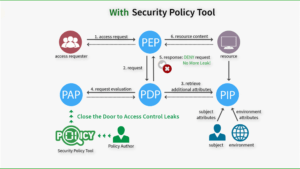
Security Policy Tool – A Tool for Editing, Modeling, Testing, and Verifying Security Policies to Prevent Access Control Leakage-Security Policy Tool: 5 Ways to Close The Door to Access Control Leaks

1 big thing: The real threat posed by ZTE’s telecom equipment

Codebook

1 big thing: The real threat posed by ZTE’s telecom equipment

Codebook

ISACA Reveals: Smart Cities Pose New Security Challenges and Opportunities

As smart cities integrate connected technologies to operate more efficiently and improve the quality of city services, new vulnerabilities arise that require diligent governance of municipal technology. New ISACA research on smart cities reveals several key areas of consideration when it comes to the security of these cities and the critical infrastructure systems they depend upon.

Global survey respondents flag the energy sector to be the critical infrastructure system most susceptible to cyberattacks (71%), followed by communications (70%) and financial services (64%). Interestingly enough, energy and communications also are among the top three critical infrastructure sectors that respondents anticipate can benefit the most from smart cities, along with transportation.

The research shows that malware/ransomware and denial of service are the two most concerning types of smart infrastructure attacks. Additionally, respondents noted that cities’ smart infrastructure is most likely to be targeted by nation-states (67%) and hacktivists (63%).

Despite the many threats for which cities are specifically vulnerable, only 15% of respondents consider cities to be most equipped to contend with smart infrastructure cyber attacks, compared to 55% who think the national government would be better suited to deal with the threats.

“Before our cities can be identified as being ‘smart,’ we must first and foremost transfer this smart attitude to the way we approach and govern the rollout of new technology and systems,” said Robert E Stroud, CGEIT, CRISC, past ISACA board chair and chief product officer at XebiaLabs. “Our urban centers have many potentially attractive targets for those with ill intent, so it is critical that cities make the needed investments in well-trained security professionals and in modernizing their information and technology infrastructure.”

The majority of respondents consider implementing new tools and techniques such as smart grids and artificial intelligence for cybersecurity to be important, but less than half of respondents consider those likely to be implemented in the next five years.

The need for more effective communication with residents living in a developing smart city also is apparent, as 3 in 4 respondents indicate that municipal governments have not educated residents well about the benefits of living in smart cities. Tapping into smart technology to modernize parking, ID systems and other city services can create efficiencies and lessen congestion.

ISACA’s research polled around 2,000 global respondents in February and March 2018. More information on the research and related resources can be found at www.isaca.org/smart-cities-survey.


Will privacy rights stymie AI?

Will privacy rights stymie AI?

With the right to privacy the subject of significant regulation, AI analytics will be under increasing scrutiny. Experts say companies using AI with personal data must focus on GDPR and HIPAA, but long term, companies can expect governments and people affected to increasingly push for audits and explanations of AI decisions. @Enterprisenxt

Will privacy rights stymie AI?