Cyber Security Books

Big Breaches: Cybersecurity Lessons for Everyone Available Online on March 8, 2021 Big Breaches: Cybersecurity Lessons for Everyone (Photo: Business
Big Breaches: Cybersecurity Lessons for Everyone by Neil Daswani and Moudy Elbayadi The key to understanding the value of the
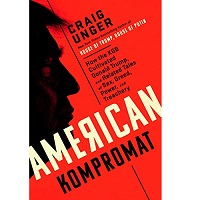
Craig Unger, who gave us the important books House of Bush, House of Saud and The Fall of the House
Mathieu Gorge, a noted cybersecurity expert and founder of VigiTrust, has published a new book, The Cyber Elephant in the
The Reasonable Robot: Artificial Intelligence and the Law, a new book by Ryan Abbott, MD, JD, MTOM, PhD, takes on
Manipulated: Inside the Cyber War to Hijack Elections and Distort the Truth, by Theresa Payton, takes on what is arguably
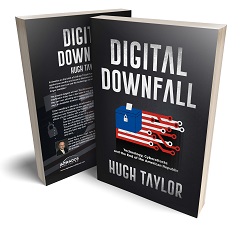
Digital Downfall
Marc Germain, 7/7/20 « TalkRadioOne Marc Germain, 7/7/20 « TalkRadioOne Podcast: Play in new window | Download Marc Germain, 7/7/20
Exclusive Interview With Hugh Taylor, Author Of Digital Downfall - SecureBlitz Cybersecurity In Digital Downfall: Technology, Cyberattacks, and the End
Offers in-depth analysis of how America’s reliance on insecure technology results in serious national security problems   NEW YORK—June 18,
I am excited to announce the publication of my new book, Digital Downfall: Technology, Cyberattacks and the End of the

The technology publishing industry is now releasing numerous cyber security books every year. Some are highly technical in nature, such as those published by Manning Publications. Others are based on cyber security research. Some, like Jim Sciutto’s The Shadow War, are not primarily about cyber security, but rather deal with urgent national security issues that relate to cyber security and cyber espionage.

Why Read Cyber Security Books?

Books about cyber security are helpful for many reasons. For one thing, they often provide good explanations for extremely complex topics. They can help non-technical people understand deep technological issues that affect security. Like, what’s ransomware? Most people have a general idea of how ransomware works, but a good cyber security book can spell out the threat and its impact in plain English.

Going in the other direction, a cyber security book can explain business, public policy or national security issues to a cyber security practitioner. There is a great need for this kind of cross-disciplinary dialogue. Many cyber security analysts and topical experts lack a firm grasp of the broader legal and public policy issues that affect their work.


Books about Political Philosophy that Deal with Cyber Security

Cyber security, cyber threats and digital disinformation—which is a form of cyberattack, at a deep level—make appearances in several recent books about political philosophy. For example, Timothy Snyder’s The Road To Unfreedom, as well as his short book, On Tyranny, examine the impact of digital technology on political sensibilities. They discuss the potentially devasting impact of cyberattacks from political actors like the Russian FSB security services on vulnerable countries like Ukraine.


Cyber Security Books about Public Policy

There have been some excellent recent books that deal with cybersecurity in the contexts of public policy and military strategy. For instance, Cyberspace in Peace and War, written by Professor Martin C. Libicki at the US Naval Academy, provides the reader with a comprehensive technological and military overview of cyberwar. It happens to be remarkably thorough in dealing with some very complex issues.

The author introduces the subject with a detailed review of cyberattacks. He then defines the main approaches to cyberdefense, delving into the tricky conversation about what the government should or should do about the problem.


New Book by Co-Director of Advanced Cybersecurity Program Reveals Effective Cybersecurity Measures for Enterprises & Consumers

Big Breaches: Cybersecurity Lessons for Everyone Available Online on March 8, 2021

Big Breaches: Cybersecurity Lessons for Everyone (Photo: Business Wire)Big Breaches: Cybersecurity Lessons for Everyone (Photo: Business Wire)

SAN FRANCISCO–(BUSINESS WIRE)–Former Google & Twitter security leader, Co-Director of Stanford Online’s Advanced Cybersecurity Certificate Program and best-selling author Neil Daswani is releasing his highly anticipated book, Big Breaches: Cybersecurity Lessons for Everyoneco-authored together with Moudy Elbayadi, CTO of Shutterfly (Apress Publishing; Currently available for purchase at book retailers worldwide), showcasing some of the largest security breaches in history, their impact on economic, social, and political landscapes and what was learned to prevent similar breaches in the future.

As a Chief Information Security Officer (CISO), entrepreneur and educator, Daswani distills his experiences, research and analyses to offer current and aspiring CISOs, CIOs, CTOs as well as security and technology professionals a roadmap for recovery, providing actionable insights. As cybersecurity remains a top business concern, Big Breaches helps technology professionals navigate security strategy and members of boards of directors ask the right questions in the boardroom. The book also provides investors with a deep analysis of the areas where more cybersecurity investment is needed.

By digging into some of the most high-profile breaches in recent history and analyzing their root causes, Daswani offers enterprises advice for mitigating damage and recovering should a breach take place. This includes key attributes shared by many of the most successful security organizations, ranging from building privacy into their processes to effectively automating critical security activities.

The dangers of cybercrime are real and vast, not only for enterprises but also for the average consumer. In fact, the Privacy Rights Clearinghouse, a nonprofit organization that tracks data breaches, reports that more than 11.7 billion records have been breached since 2005.1 While major corporations have access to security professionals and tools, individuals, especially in a remote working environment, are facing similar threats without additional protections in place.

Whether you’re a small business owner or simply one of the millions of Americans currently working remotely, Big Breaches provides a solid understanding of how phishing, malware, software vulnerabilities, third-party compromise and abuse, unencrypted data, and inadvertent employee mistakes have devastated businesses, and personal lives.

Daswani provides guidance on how we can all learn from mistakes of the past and ensure our cybersecurity. The book also offers a chapter dedicated to helping consumers protect themselves with a Consumer Defense Checklist that has exclusive tips to ensure your digital profile is secure, including:

  • Enabling two-factor authentication on every platform that offers it
  • Using a password manager
  • Enrolling in identity protection
  • Securing your home router with firewalls, parental controls, etc.
  • Installing anti-malware software
  • Enabling storage encryption
  • Backing up files within secure cloud software

If you are interested in learning more about Big Breaches: Cybersecurity Lessons for Everyone follow @neildaswani and visit https://bigbreaches.com/.

“Privacy Rights Clearinghouse,” accessed March 6, 2021, https://privacyrights.org.

ABOUT NEIL DASWANI

Neil Daswani is a Co-Director of the Stanford Advanced Cybersecurity Program, and Co-Author of “Foundations of Security: What Every Programmer Needs To Know” (Apress, ISBN 1590597842; amongst the top 100 selling of all Apress titles).

He has served in a variety of research, development, teaching, and managerial roles at Symantec, LifeLock, Twitter, Dasient, Google, Stanford University, NTT DoCoMo USA Labs, Yodlee, and Telcordia Technologies (formerly Bellcore). At Symantec, he was the Chief Information Security Officer (CISO) for Symantec’s Consumer Business Unit, and at LifeLock he was the company-wide CISO.

His DNA is deeply rooted in security research and development, he has dozens of technical articles published in top academic and industry conferences (ACM, IEEE, USENIX, RSA, BlackHat, and OWASP), and he has been granted over a dozen U.S. patents. Neil frequently gives talks at industry and academic conferences and has been quoted by publications such as The New York Times, USA Today, and CSO Magazine. Neil earned Ph.D. and M.S. degrees in Computer Science at Stanford University and holds a B.S. in Computer Science with honors with distinction from Columbia University.

Contacts

Ashley Bernardi
W2 Communications on behalf of Neil Daswani
ashley.bernardi@w2comm.com

Book Review: Big Breaches: Cybersecurity Lessons for Everyone

Big Breaches: Cybersecurity Lessons for Everyone

by Neil Daswani and Moudy Elbayadi

The key to understanding the value of the new book, Big Breaches: Cybersecurity Lessons for Everyone, by Neil Daswani and Moudy Elbayadi, is the word “everyone” in its title. The authors go into significant detail recounting the most destructive and notorious data breaches of the last decade. These are cybersecurity disasters that “everyone” surely knows about. Tout le monde! We know all about these breaches, or so we think. As the book makes clear, “everyone” clearly doesn’t have much of a real clue how bad things are—and how much worse things are about to get. Thus, “everyone,” me included, needs some cybersecurity lessons.

The book goes into depth on the breaches at Capitol One, Marriott, Equifax and more. It reviews what went wrong at Office of Personnel Management (OPM), Yahoo, Target and JP Morgan Chase. The authors also delve into some of Facebook’s data leaks and irregularities. Throughout, they look at how these incidents almost always involve a failure to prioritize, invest in and execute cybersecurity initiatives.

Big Breaches deals with one of the great ironies of this era: Despite spending tens of billions of dollars on security, the world seems less and less secure with every passing year. Hundreds of thousands of security jobs remain unfilled, a problem that doesn’t seem to have an immediate solution. Thus, the authors have undertaken this ambitious book as a step toward empowering more people (everyone!) to become informed and more active in mitigating cyber risk.

Case by case, Daswani and Elbayadi lay out effective prevention and detection countermeasures. They explore the meta-level causes of breaches and suggest seven crucial habits for optimal security in the organization. One of their main points is that security needs to evolve beyond its current scope. The sophistication of today’s threats demand it. Companies can no longer rely on the traditional “InfoSec” policies. The security perimeter that once supported these ideas no longer exists.

Instead, it’s up to everyone to get more involved. That’s the only way to avoid more Marriotts, Yahoos and Equifaxes going forward.

Book details:

Publisher : Apress; 1st ed. edition (March 12, 2021)

Language : English

Paperback : 475 pages

ISBN-10 : 1484266544

ISBN-13 : 978-1484266540


Book Review: American Kompromat

Craig Unger, who gave us the important books House of Bush, House of Saud and The Fall of the House of Bush, once again delivers with American Kompromat: How the KGB Cultivated Donald Trump, and Related Tales of Sex, Greed, Power, and Treachery. As the book’s sub-title explains, this is an exploration into an issue that has been widely discussed, but not well understood or documented over the last five years, namely the true nature of Donald Trump’s relationship with Russia, and before that, the Soviet Union.

Ungar probes the matter deeply, speaking with former KBG officers and others who claim to have been personally involved in cultivating Trump as a contact for the KGB as far back as the 1970s. While it is impossible to prove that Trump was and probably still is a Russian intelligence asset, Ungar does a good job of making the case. Indeed, the entire book is meant to serve as the counter-intelligence investigation that was promised by the Mueller report, but which failed to materialize. Among many useful aspects of this book, provides a detailed retelling of that particular disappointment and highlights the role that Attorney General William Barr played in lying to the American public about Mueller’s work.

This book also introduces Americans to the idea of kompromat, which is Russian for “compromised.” Ungar explains how the KGB and its successor entity, the FSB, seek evidence of embarrassing or criminal behavior among potential intelligence assets—the better to blackmail them into doing the bidding of the Russian intelligence services.

As for Trump, though the book circles the subject repeatedly, Ungar cannot quite pin down exactly what it is that the Russian have on the man. At one level, as he explains, it’s obvious: Trump was involved in laundering over a billion dollars in illegal money from the Russian mafia. So, as he puts it, “They own him.” But, do they? As Ungar describes, what Trump did with those condo sales to shell companies that may or may not have been owned by Russian gangsters, is perfectly legal.

The bigger question Ungar begs is what could possibly be embarrassing to Donald Trump, a man who does not possess a normal sense of shame? It’s not likely to be a sexual issue. Nor would financial shenanigans be much of a blackmail subject for Trump—certainly not something that happened 40 years ago.

Ungar focuses intently on what he believes is the seminal event in Trump’s recruitment by the KGB. As he was building the Grand Hyatt in New York in the late 1970s, Trump, for some mysterious reason, decided to buy hundreds of televisions for the hotel from an obscure, Russian-owned electronics shop on 23rd street in Manhattan. This shop was owned by a Russian émigré who was known to the FBI as a “spotter agent” who saw potential in Trump and referred him to the KGB station in New York. The KGB then cultivated Trump, inviting him on a lavish trip to Russia, flattering him and encouraging him to share their talking points on nuclear war and strategic alliances.

Susceptible to flattery, Trump took out a full-page ad in The New York Times advocating for Japan to “pay its own way” in defense, a position he continues to assert to this day. According to Ungar, this was a huge success for the KGB, as they had their message being printed in a major American paper. The rest, as we well know now, involves Trump repeatedly restating Russian talking points, siding with Russia against the USA and granting strategic favors to Russia, such as by withdrawing American forces from Syria. As Ungar reveals, Trump is certainly acting like an intelligence asset.

However, there is still something missing here. It may not be fair to lay this at Ungar’s feet, but it is not clear what would actually compel Trump to act this way. Ungar is a journalist, so he doesn’t speculate on what he cannot corroborate. However, Trump’s money laundering is legal. Any sexual indiscretions would be celebrated by his followers. What do they have on him?

The television purchase is a possible hint. If you know how the mafia works, it’s more likely that they already had something on Trump, thus forcing him to buy TVs from a Russian mob-connected vendor, rather than a regular TV wholesaler. That’s how the mob works: when they own you, you buy from them. Ask any New York restaurateur who is forced to buy liquor and table clothes from mob owned companies.

Along the way, Ungar delves into the stories of Robert Maxwell, his daughter Ghislaine Maxwell and Jeffrey Epstein. The book is not able to complete the circle, linking Epstein to Trump and the Russians. Yet, what he does convey is still pretty shocking: When Epstein was arrested in 2005 on charges of soliciting a minor for sex, his alleged treasure trove of videos of powerful men having sex with young girls got into the hands of the Palm Beach Sherriff’s department… where it seems to have made its way to Russia, the law firm of Kirkland and Ellis (Bill Barr’s firm) and other entities would love the blackmail fodder it provides. The implication is that, with Epstein’s materials, Russia was in a position to blackmail anyone who opposed Trump. This could explain the odd loyalty to Trump expressed by any number of otherwise sensible people.

The book also goes into rather lengthy tangents about Bill Barr and the Opus Dei Catholic organization, which apparently influences a lot of policy in Washington, under the radar. According to Ungar, Barr’s embrace of the Unitary Executive theory is in the service of enacting Opus Dei’s Catholic brand of authoritarianism in the US. This reads more or less like a separate book, but it’s definitely interesting. Barr comes off as someone who opportunistically uses Trump’s popularity to advance his Catholic autocratic agenda. This includes protecting Trump from the Russia investigation.


Book Notice: The Cyber Elephant in the Boardroom

Mathieu Gorge, a noted cybersecurity expert and founder of VigiTrust, has published a new book, The Cyber Elephant in the Boardroom, with ForbesBooks. Gorge brings a significant amount of experience and insight to the serious challenge of getting corporate boards of directors and C-level executives to make the right choices on cybersecurity risk management. Indeed, cyber threats and regulatory compliance challenges have become increasingly difficult to deal with, even as the penalties for making mistakes have risen astronomically.

Gorge has worked with many senior leadership teams and CXOs who have struggled to understand and respond to the new threat environment. In his experience, board members are willing and interested in doing the right thing. The problem is a lack of awareness of how things actually work, coupled with poor solution choices. As he points out in the book, many remedies for cyber risk and compliance take board directors down technological rabbit holes that leave everyone scratching their heads.

He offers an approach that enables decision makers to fully understand the components and philosophies that comprise a cybersecurity program. This is Gorge’s 5 Pillars of Security Framework™, a proven and industry-agnostic methodology that enables businesses of all sizes to map cybersecurity risks and implement a cybersecurity strategy. The Framework demonstrates cyber accountability to regulators, government bodies and law enforcement agencies.

As Gorge put it, “The Cyber Elephant in the Boardroom addresses the growing divide between what must be done and what boards are willing to do – and provides the real-world advice necessary to meet this challenge.”

To keep things simple and relatable, the 5 Pillars cover:

  • Physical security
  • People security
  • Data security
  • Infrastructure security
  • Crisis management

With this understandable foundation, boards can then dive into the detail that it will take to mitigate risks. The brilliance of this approach is its technically agnostic nature. It strips away vendor and industry jargon and paradigms. It’s not selling anything.

Other chapters cover a range of topics, including PCI DSS compliance, HR cybersecurity risk, and the intersection of cybersecurity and business digitization. Guest authors include: James Grundvig, author and tech journalist; Nina Shulepina, Banking Compliance Professional and Member Of The VigiTrust Global Advisory Board; Cathy C. Smith, founder, Women in Tech NJ & NY; Marco Antonio Soriano, CIO, The Soriano Group & Family Office; Robert K. Gardner, president, New World Technology Partners; Nick Vigier, CXO advisor – cyberstrategy, Coalfire; Ed Adams, president and CEO, Security Innovation; Marie-Christine Vittet, VP of compliance, Accor; Cecile Martin and Thibaud Lauxerois, managing partner and attorney (respectively) of the Ogletree Deakins Paris office; and Alexander Abramov, Board Member and Past President of ISACA New York Metropolitan Chapter.


The Reasonable Robot: Artificial Intelligence and the Law

The Reasonable Robot: Artificial Intelligence and the Law, a new book by Ryan Abbott, MD, JD, MTOM, PhD, takes on a topic that is surely coming to a courtroom and legislative session near you. Though it’s written for lawyers and policy makers, the book is accessible to the general reader. It uses relatable examples from real life to explore how Artificial Intelligence (AI) is changing society, business and government to the point where the law will have to adapt to accommodate it.

Abbott approaches the issue from a variety of perspectives, including liability and torts, criminal law, intellectual property and taxation. In each area, he argues that AI is not on a “level playing field” with human beings in the eyes of the law. This begs the question, though, “Should AI be on the same level as human beings?” Should “an AI,” as he calls the hypothetical, human-like machine-based intelligence, be held to a different legal standard than actual humans?

It’s a good question, and even if you think you know the answer, it’s an issue that is definitely going to be getting a lot of attention in coming years. For example, if an AI, such as one that powers a self-driving car, causes an accident, should the courts treat it (the AI, not the car) as if it were a human driver? That way, the AI’s “conduct” would be viewed from the perspective of the “reasonable man” standard, versus being treated merely as a defective product. The latter standard would result in much higher and less flexible financial judgments against the AI and its maker.

Abbott also examines how AI inadvertently creates tax incentives for automation, which drives job loss. He highlights AI’s role as a criminal actor and its potential to create new inventions and artistic works. As a patent attorney, Abbott is actually in the process of trying to get a patent registered to an AI, rather than a human inventor in the UK.

It’s a readable book, though it will likely only be relevant to people with a strong interest in the topic. However, Abbott, who is a Professor of Law and Health Sciences at the University of Surrey School of Law and Adjunct Assistant Professor of Medicine at the David Geffen School of Medicine at UCLA, has done the legal and policy fields a significant service with this book. He methodically lays out the contours of the complex legal and philosophical arguments that will go into addressing the underlying issues.

It can be a slightly frustrating subject, however. For one thing, the AI entity he envisions is not quite here yet. Most uses of AI, impressive as they may be, relate to deployments of extremely deep but narrow cognitive technologies, e.g. analysis of MRI scans to detect tumors. Such a computer program (and that’s really all AI is) can be an outstanding diagnostician, but it doesn’t know the difference between a loaf of bread and the Mona Lisa.

Also, certain issues are moot, even if they’re interesting to discuss. AI is used to commit crimes, for instance. That is already a big problem and will only grow more serious over time. However, the perpetrators will never be held to account. They hide behind anonymous machines and foreign countries that lack extradition. The resulting legal arguments about AI’s criminal conduct are academic.

As Abbott reveals, though, a discussion of AI’s legal rights quickly takes the reader into some grand themes, like what is the nature of the law itself? What is intelligence? If an artificial “person” in the form of a corporation has legal rights and responsibility, then why can’t an AI have such rights and responsibilities?

Your opinion of the book will probably depend on whether you view AI as a product that’s owned by a company or an independent life form. If AI is a product, then its owners are responsible for whatever it does—even if they can’t control it. In that sense, AI is no different from the wild ox discussed in Talmudic law 2,000 years ago. Who is responsible if it goes on a rampage? These are not new issues. AI revivifies them.


Book Review: “Manipulated: Inside the Cyberwar to Hijack Elections and Distort the Truth”

Manipulated: Inside the Cyber War to Hijack Elections and Distort the Truth, by Theresa Payton, takes on what is arguably the most important issue facing Americans today: the global digital war on democracy being waged by our geopolitical adversaries. Indeed, as she explains, most of the world is threatened by cyber election meddling.

The basic story is familiar to people who follow the news. Russian and Chinese state actors, along with cyberwar units in Iran and elsewhere, are using highly sophisticated digital technologies to shift American public opinion and even hack the election infrastructure itself. What Payton does so skillfully in the book, though, is to flesh out the frightening reality of America’s true vulnerability to foreign manipulation of its political process.

Payton comes to this task with strong credentials. She was the first woman to serve as White House CIO, under President George W. Bush. Now, Payton is CEO of Fortalice Solutions, a cybersecurity and intelligence services firm. She brings an experienced eye to a subject that can be overwhelming and bewildering to most Americans.

The book lays out the depth and breadth of the threats the country is facing. She chronicles the many different ways that Russia and China are pushing false narratives on social media and infusing the American news ecosystem with distracting stories aimed at advanced their preferred candidates for office—or, in some cases, favoring their geopolitical agendas.

Payton then probes several underlying issues that are necessary to understanding what’s going on. She discusses how Americans have difficulty determining which stories are true and which are fake. The pace and volume of digital news and the trust-based nature of social media groups make it hard for most people to spot a fake story planted by the GRU.

She then gets into the technological aspects of this phenomenon, and again, the news is not encouraging. Our adversaries are getting strong and more sophisticated, with deep fake videos, fake social media personas and more. Payton examines the immense hacking and trolling infrastructure that Russia and China can bring to bear on American politics.

The book digs into the motivations that authoritarian countries like Russia, China and Iran have for poisoning democratic governments in the US, UK and elsewhere. It has to do with their regimes clinging to their own power. They don’t want their people pining away for American-style democratic rights. So, they conspire to make American democracy look like a sham.

She is also not shy about pointing the finger at our own country. The US is notorious for election meddling. We’re shocked to have it happening to us, but if you live in Central America, for example, you will be quite familiar with the US barging in and distorting your political process for its regional strategies.

As she explains, election meddling is nothing new. Interfering in the internal affairs of other states has been going on since ancient times, as she points out. However, digital technology makes things different. Lies can spread so much faster. The public is so deluged with stories, it cannot keep up.

Payton concludes the book with suggestions on what the government and individuals can do to mitigate the impact of these brazen foreign attempts at manipulation. She encourages people to check their sources and become savvier about what she calls “The manipulator’s playbook.” Tech companies need to step up. Congress needs to strengthen laws about cyber fraud, and so forth.

Having read several books on the themes of foreign cyber war against the US, I experienced a familiar sense of dread after finishing Manipulated. The threats are potent. The proposed solutions are optimistic but perhaps a bit naïve. One gets the sinking feeling that, like the digital lies that move at the speed of light, the threats attempting to destroy our democracy can move a lost faster than any potential solution. We may be dealing with the effects of the attacks way before we have a workable answer—and by then, the damage will be done.

Of course, the problem may ease back into a more manageable state in the next few years. Payton doesn’t say this, because she’s polite and a professional, but one of the main reasons the manipulation is so problematic today is because it appears that the White House itself is in on it. For sure, the administration and its allies are willfully promoting Russian propaganda they know to be false because it helps further their political agenda. Perhaps, on a different day in the near future, both political parties will look askance at foreign interference and join forces to defeat it.


Hugh Taylor Interviewed on TalkRadioOne by Marc Germain

Marc Germain, 7/7/20 « TalkRadioOne

Marc Germain, 7/7/20 « TalkRadioOne

Podcast: Play in new window | Download

Marc Germain, 7/7/20 « TalkRadioOne

Exclusive Interview With Hugh Taylor, Author Of Digital Downfall – SecureBlitz Cybersecurity

Exclusive Interview With Hugh Taylor, Author Of Digital Downfall – SecureBlitz Cybersecurity

In Digital Downfall: Technology, Cyberattacks, and the End of the American Republic, Hugh Taylor addresses America’s vulnerability to cyberattacks.

Exclusive Interview With Hugh Taylor, Author Of Digital Downfall – SecureBlitz Cybersecurity

New Book, Digital Downfall, Reveals Foreign Cyber Role in Current American Unrest

Offers in-depth analysis of how America’s reliance on insecure technology results in serious national security problems


NEW YORK—June 18, 2020—A new book, Digital Downfall: Technology, Cyberattacks and the End of the American Republic, reveals how Russian and Chinese cyberattacks and digital influence campaigns have aggravated the already destabilizing effects of the COVID 19 pandemic and anti-police protests. Written by Hugh Taylor, Editor of The Journal of Cyber Policy, the book offers an analysis of the national security problems arising from America’s reliance on insecure technology to run virtually every aspect of its government and society.

Digital Downfall

“The US is more vulnerable to destructive foreign interference today than it has been in over a century,” said Taylor. “Russia and China realize they can’t win shooting wars against the US, so they’re using digital technology to inflame existing divisions in our society to weaken us and distract us from their own aggressive geopolitical agendas.”


The book uses data about cyberattacks and known weaknesses in US technology infrastructure to build risk scenarios. The author posits that multi-faceted cyber and disinformation attacks could trigger unparalleled chaos and disruption in the US. As Taylor noted, his scenarios are coming true sooner than he might have guessed. “Events that seemed paranoid, even loony to predict when I was writing the book six months ago now seem painfully prescient.”


“Software bots accounted for nearly half the tweets encouraging armed men to threaten elected officials with death in protests over COVID-19 lockdowns,” Taylor explained. “We don’t know who created these bots. They could be from Russia, China or the USA. However, the fact that we can’t figure this out reveals the depth of the problem, from a national security perspective. We are nearing a state of armed insurrection and we don’t know who gave the order to make it start.”


The book takes an unsparing look at the consequences of using inherently insecure computers and networks to power American industry, government, telecommunications, military and news media. It assesses Russian and Chinese cyber campaigns against the US, which they refer to as “Hybrid Warfare” and “Unrestricted Warfare” respectively. Taylor also investigates the power of digital technology to distort the truth and harden public opinion in favor of ideas that bear little relationship to reality—but which serve the needs of America’s enemies.


Digital Downfall takes on uncomfortable topics, such as Russia’s willingness to pit American racial groups against one another to foment violent instability. “Polite Americans don’t want to talk about such touchy subjects, but Russia has no problem ‘going there,’ so to speak. The Russian military doesn’t have to eat Thanksgiving at your house this year. They’re delighted to trigger hate-fueled violence using fake Facebook groups if that will keep us from focusing on their illegal war in the Ukraine.”

Ultimately, the book asks the reader to consider if the US is on the brink of civil war. It looks at how cyber meddling in elections, disinformation campaigns and abuse of social media are widening racial and political divides in the US. It also examines the vulnerability of the American military, along with the US economy, as further risk factors.


Taylor has been working in the enterprise technology and cybersecurity fields for over 20 years, earning a Certified Information Security Manager (CISM) credential in the process. He writes extensively about cybersecurity, software design, data management, cloud computing and enterprise information technology (IT).


Digital Downfall is published by Intrados Publishing. For more information, visit https://journalofcyberpolicy.com/digital-downfall/


END
# # #


Media Contact

Alison Riggs

Randall | Riggs Public Relations

ali@randall-riggs.com

(917) 512-1934

My New Book, Digital Downfall, Reveals Foreign Cyber Role in Current American Unrest

I am excited to announce the publication of my new book, Digital Downfall: Technology, Cyberattacks and the End of the American Republic. Many of the experts I have interviewed on this blog are featured in the book. I will highlight their contributions in upcoming articles.

The book reveals how Russian and Chinese cyberattacks and digital influence campaigns have aggravated the already destabilizing effects of the COVID 19 pandemic and anti-police protests. It offers an analysis of the national security problems arising from our reliance on insecure technology to run virtually every aspect of our government and society—to the point where the survival of the US government itself is in jeopardy.

This may sound insane, but a sober look at the current situation will reveal an unfortunate truth: The US is more vulnerable to destructive foreign interference today than it has been in over a century. Russia and China realize they can’t win shooting wars against the US, so they’re using digital technology to inflame existing divisions in our society to weaken us and distract us from their own aggressive geopolitical agendas.

A sober look at the current situation will reveal an unfortunate truth: The US is more vulnerable to destructive foreign interference today than it has been in over a century.

In the book, I use data about cyberattacks and known weaknesses in US technology infrastructure to build risk scenarios. I posit that multi-faceted cyber and disinformation attacks could trigger unparalleled chaos and disruption in the US. What’s really crazy is that my scenarios are coming true sooner than I might have guessed. Events that seemed paranoid, even loony to predict when I was writing the book six months ago now seem painfully prescient.

Software bots accounted for nearly half the tweets that encouraged heavily armed men to threaten elected officials with death in protests over COVID-19 lockdowns. We don’t know who created these bots.

For instance, software bots accounted for nearly half the tweets that encouraged heavily armed men to threaten elected officials with death in protests over COVID-19 lockdowns. We don’t know who created these bots. They could be from Russia, China or the USA. However, the fact that we can’t figure this out reveals the depth of the problem, from a national security perspective. We are nearing a state of armed insurrection and we don’t know who gave the order to get the process rolling.

The book takes an unsparing look at the consequences of using inherently insecure computers and networks to power American industry, government, telecommunications, military and news media. It assesses Russian and Chinese cyber campaigns against the US, which they refer to as “Hybrid Warfare” and “Unrestricted Warfare” respectively. I also investigate the power of digital technology to distort the truth and harden public opinion in favor of ideas that bear little relationship to reality—but which serve the needs of America’s enemies.

Digital Downfall takes on uncomfortable topics, such as Russia’s willingness to pit American racial groups against one another to foment violent instability.

Digital Downfall takes on uncomfortable topics, such as Russia’s willingness to pit American racial groups against one another to foment violent instability. Polite Americans don’t want to talk about such touchy subjects, but Russia has no problem ‘going there,’ so to speak. The Russian military doesn’t have to eat Thanksgiving at your house this year. They’re delighted to trigger hate-fueled violence using fake Facebook groups if that will keep us from focusing on their illegal war in the Ukraine.

Ultimately, the book asks you to consider if the US is on the brink of civil war.

Ultimately, the book asks you to consider if the US is on the brink of civil war. It looks at how cyber meddling in elections, disinformation campaigns and abuse of social media are widening racial and political divides in the US. It also examines the vulnerability of the American military, along with the US economy, as further risk factors.